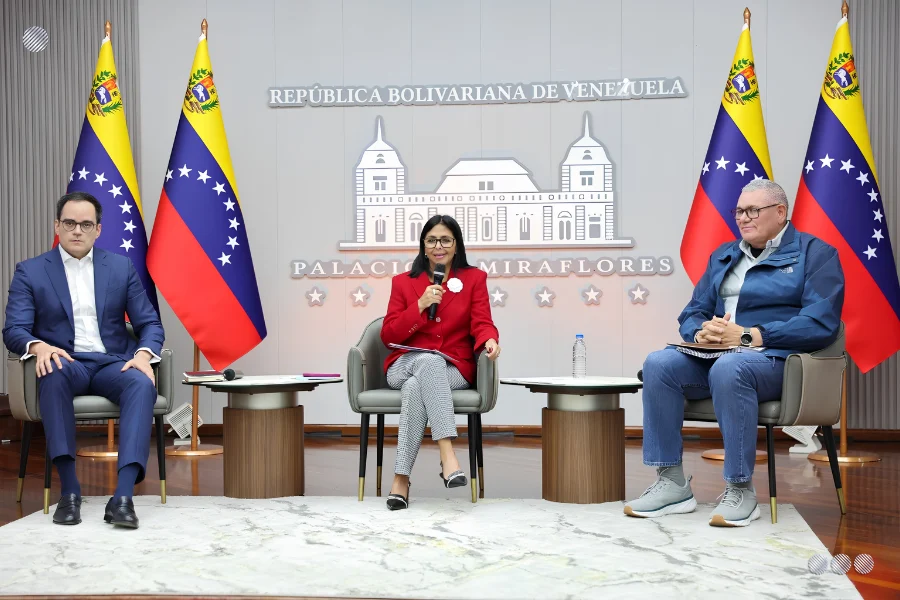
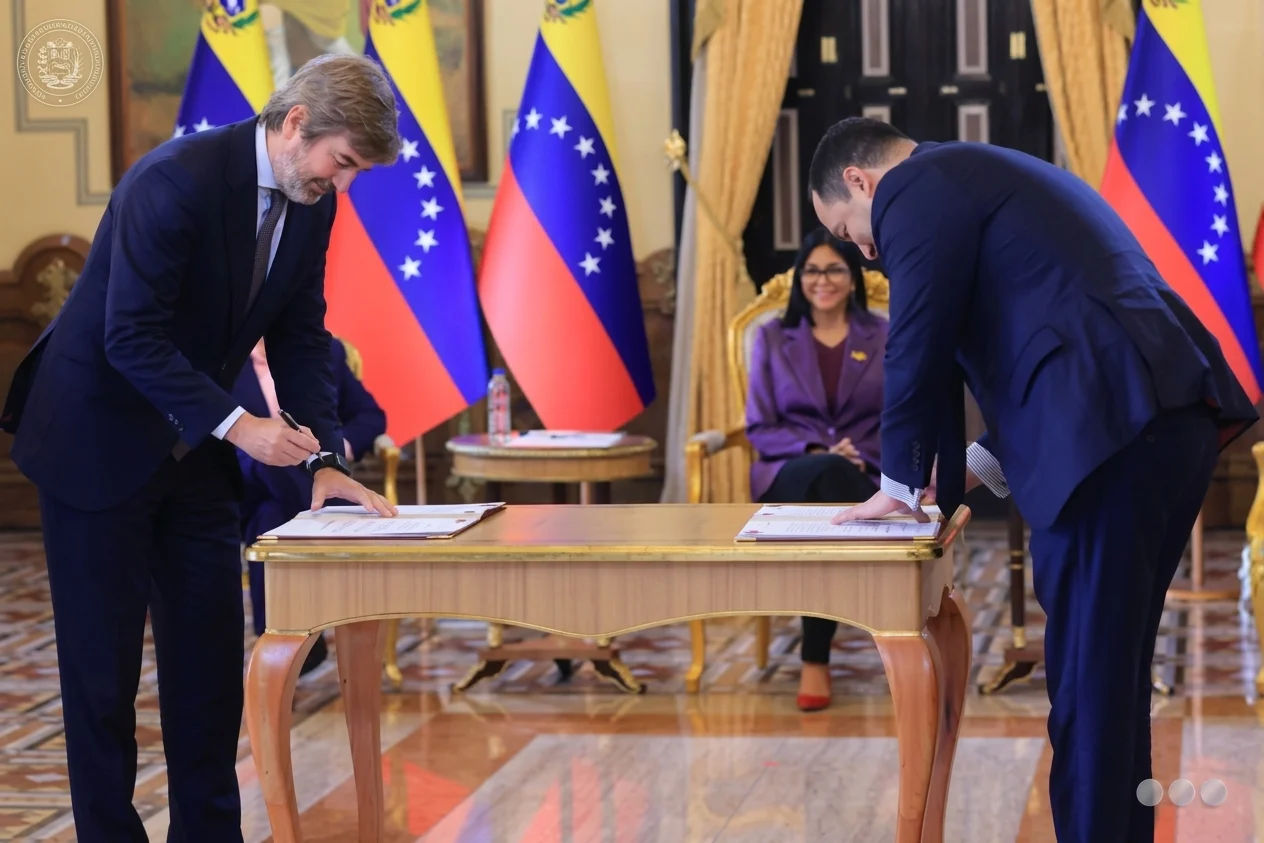
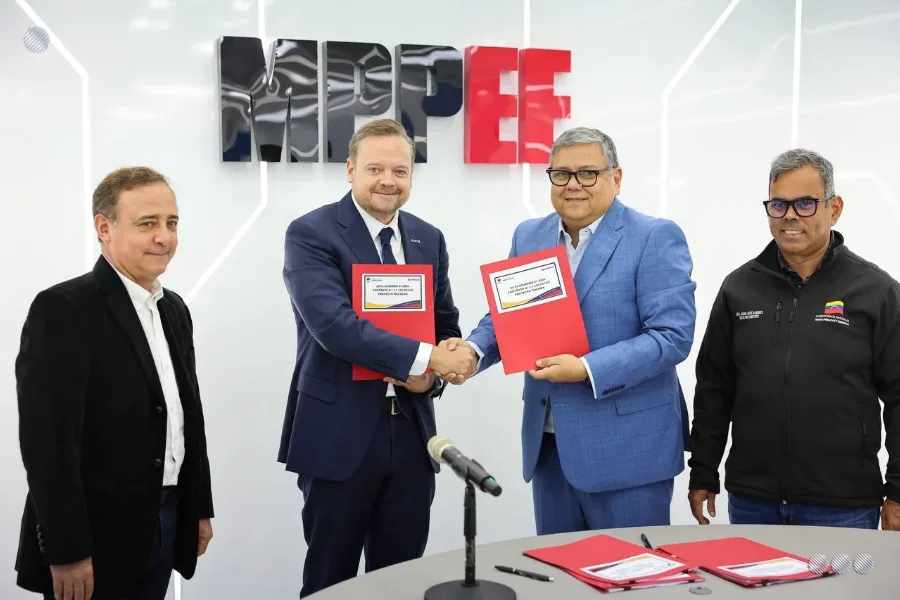
The CIIP is the Venezuelan State's official investment promotion agency and its point of contact for investors. We show them investment opportunities, connect them with the relevant institutions and guide their project through to execution.
Four steps, from the first conversation to an investment in operation. The CIIP assesses the project, tells you which investment structure and requirements apply, presents it to the State and stays with the company once it is producing.
We analyze your company, its capacity and the project you propose. On that basis, we tell you which investment structure applies and what it requires.
Once the project is qualified, we introduce you to the lead ministry for your sector, to the bodies that issue the permits and, when the structure requires it, to the state-owned company that will be your counterpart.
We follow each procedure through with the relevant agency until the project has all its authorizations.
Once the company is operating, we stay in touch to propose expansions, reinvestment and local suppliers, and to resolve whatever it needs from the State.
Market, infrastructure, industrial talent, access to the Caribbean, clear rules and a domestic energy base: real capacity to take production to a new scale.
Productive investment is welcome in any activity. These are some of the sectors that combine installed capacity, a defined framework and a clear government counterpart.
Production, processing and export across the national agrifood chain.

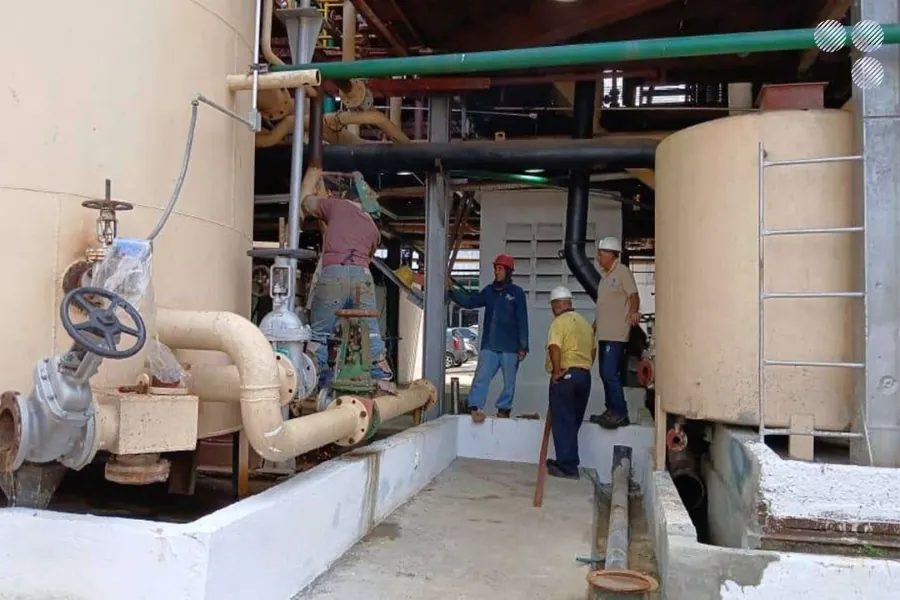
Plants and production lines ready for modernization and a new industrial scale.

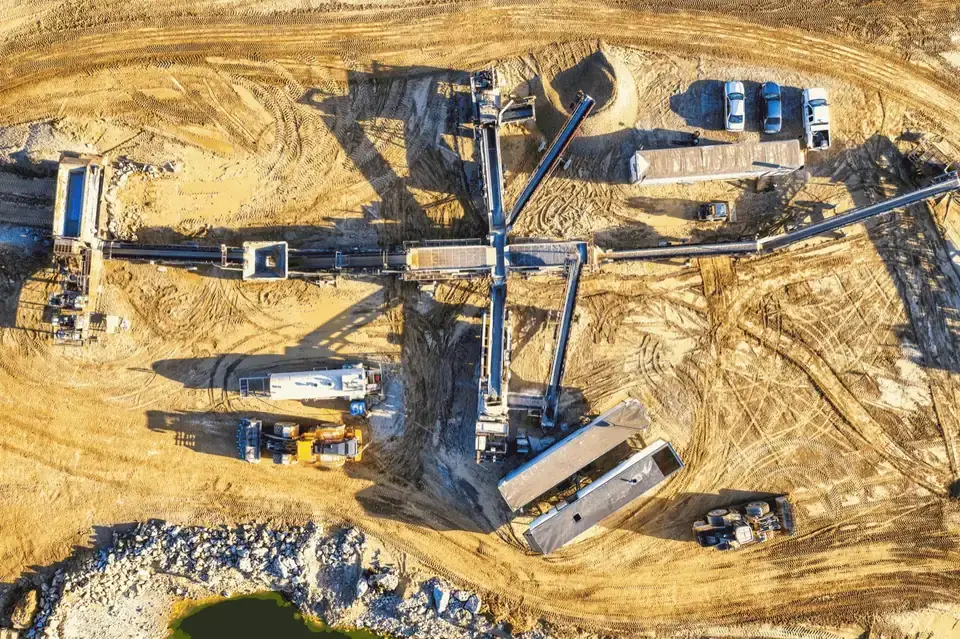
Exploration and development of new deposits under the 2026 Mining Law: concessions for metallic and non-metallic minerals, from prospecting to extraction.
Tourist destinations and services, with state-owned land and facilities to be developed under an investment plan.

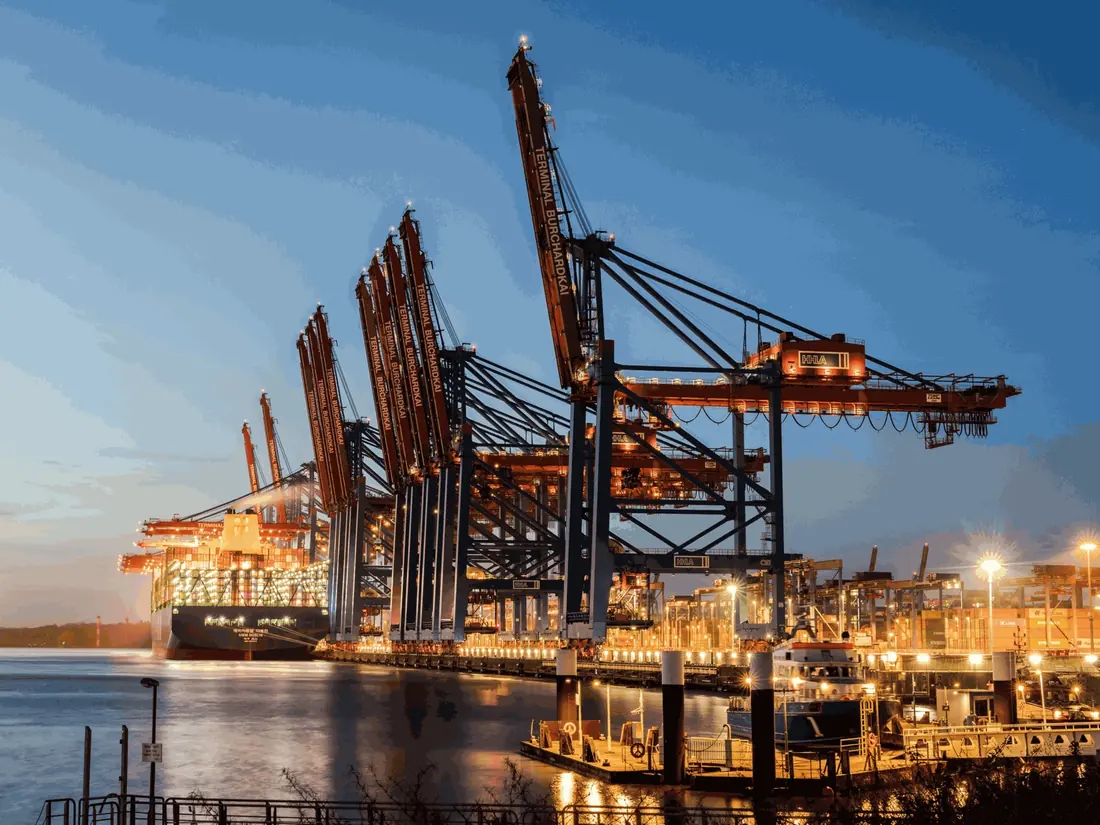
Ports, airports, railways and roads under the concession regime.
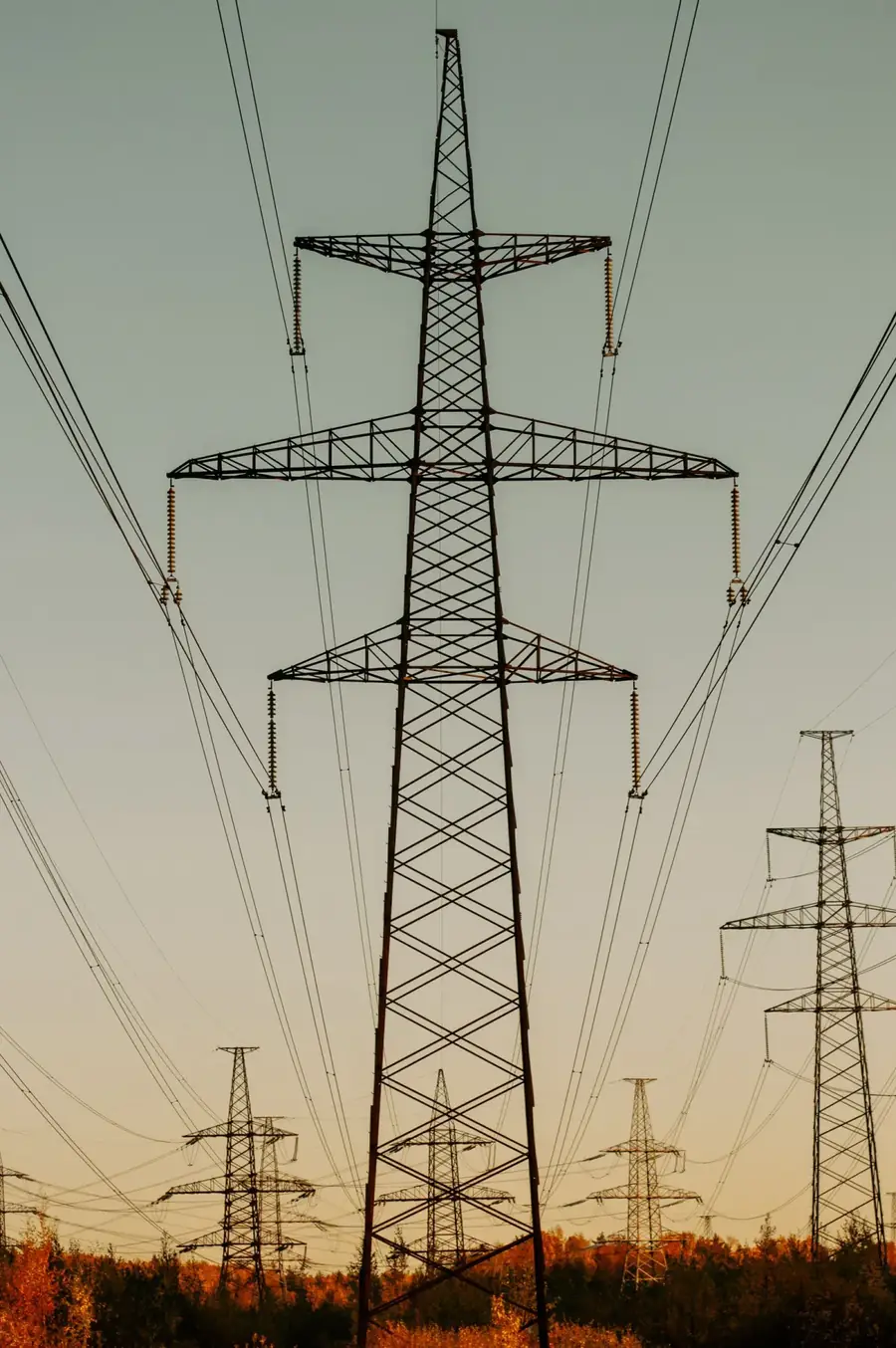
Generation for industry and special economic zones: self-generation, cogeneration and renewables.
Modernization of refineries and upgraders, fertilizer, methanol and plastics plants, and development of non-associated gas.

Fiber optics, mobile networks and data centers, under CONATEL authorization.

Do you have an initiative in one of these sectors, or in another?
Talk to the Center →Laws, reforms and agreements that today allow a foreign company to invest, operate and repatriate profits in Venezuela.

The Productive Foreign Investment Law recognizes non-discriminatory treatment and the repatriation of profits. Venezuela also maintains bilateral investment promotion and protection agreements with countries in Europe, Asia and Latin America.
Recent reforms allow private participation in hydrocarbons and mining, under contracts and conditions set by law.
Trade and cooperation agreements signed in recent years are restoring practical channels: visas, direct flights, sector agreements and investment guarantees.
Airlines, energy companies, hotel chains and logistics operators have resumed or announced operations in the country: flights, hotels and freight transport your project can count on.
Agreements, projects under way and economic results.


Rights, repatriation, deadlines and minimum amounts, with the article of law behind each answer.
The law establishes a framework for defining the terms of the investment. The Foreign Investment Contract sets out, among other aspects, the purpose, value, location, duration, financing and incentives agreed for the project, and is binding on the parties.
The law grants the foreign investor equal treatment with the investment of resident nationals and the ability to remit profits and capital abroad, subject to the conditions, timeframes and exceptions it sets out.
Favorable incentives and conditions are not automatic: they depend on the project's characteristics, the sectors defined as priorities, and the commitments formally undertaken.
Foreign investment may be established in any area, sector or economic activity permitted by Venezuelan law. The State reserves the development of certain strategic sectors under the Constitution and the legal order, and special regimes exist for specific activities.
Hydrocarbons, mining, telecommunications and media have their own legislation, which applies preferentially. For that reason, projects related to these activities are handled in coordination with the governing body of each sector.
If the project is located in a Special Economic Zone, the company profile must be evaluated and the participation project certified, in coordination with the National Superintendence of Special Economic Zones.
The law establishes that foreign investment will be treated, for all purposes, the same as investment by resident nationals, without prejudice to applicable requirements and special regimes. The treatment of investments is subject to clear, precise and determined rules.
The project's specific conditions, including agreed incentives, are set out in the Foreign Investment Contract, which is binding on the parties.
Any measure affecting the investor's rights must be processed in accordance with the Organic Law on Administrative Procedures and with respect for due process.
Incentives are determined according to each project's characteristics, commitments and objectives; they are not granted automatically. The general framework includes tax deductions, accelerated depreciation, tax rebates, customs and tax exemptions, special credit conditions, special public-service rates, preferential access to certain State-administered inputs and raw materials, and periods of tax stability.
Their granting can be linked to verifiable commitments, such as the export of non-traditional goods or services, technology transfer, the development of domestic suppliers, import substitution, job creation, and the amount and permanence of the investment.
In Special Economic Zones, specific incentives may apply, such as the import duty drawback, other domestic tax rebates, and the temporary admission regime for inward processing. Applicable conditions are set out in the Economic Activity Agreement and depend on meeting the goals and obligations undertaken.
Incentives agreed for foreign investment are incorporated into the corresponding contract and may be applied progressively, according to the fulfillment of the project's objectives.
Profits: the foreign investor has the right to remit abroad annually, starting from the close of the first fiscal year, up to one hundred percent of the verified profits or dividends from their foreign investment, in freely convertible currency and subject to fulfillment of the investment's purpose. When remittance is partial, the difference may be accumulated for a maximum of three fiscal years, subject to applicable legal conditions.
Capital: the investment must remain in national territory for a minimum period of two years, counted from the moment the investment is made. Once that period has elapsed and applicable taxes and other liabilities have been paid, the investor may remit abroad the originally invested capital. Proceeds from the sale of shares or of the investment, capital reductions, and, in the event of company liquidation, the liquidated amount may also be remitted, provided the corresponding legal requirements are met.
Reinvestment: profits obtained in national currency may be reinvested in whole or in part and recognized as foreign investment. The reinvestment must be notified to the governing body.
The Constitutional Law on Productive Foreign Investment establishes the principles, policies and procedures applicable to productive foreign investment, including its treatment and permanence in the country. It also establishes that foreign investment may be developed in any area, sector or economic activity permitted by Venezuelan law.
The ministry with authority over foreign investment acts as the governing body and centralizes the Foreign Investment Registry. Projects related to hydrocarbons, mining, telecommunications and media are governed preferentially by their special legislation and are handled in coordination with the competent bodies of each sector.
The Center is the State body that receives and routes productive investment. It promotes investment attraction, guides investors on the requirements and procedures for submitting the project, evaluates the company profile and the project, and takes it to the competent authorities. In the Special Economic Zones it also sets the submission requirements and certifies participation projects.
The Center does not charge commissions on the asset or the transaction and does not act as a financial intermediary. Where fees apply for services or for processing foreign-investment documents, these are set by the government and paid to the State.
Foreign investments are subject to the jurisdiction of the courts of the Bolivarian Republic of Venezuela.
Once domestic judicial remedies have been exhausted and where a prior agreement exists, the Republic may take part in other dispute-resolution mechanisms developed within the framework of Latin American and Caribbean integration or other integration schemes.
For that reason, any additional mechanism applicable to the project must be expressly defined in the corresponding legal instruments, in accordance with current legislation and the nature of the investment.
The law establishes timeframes for certain procedures. Bodies and entities with concurrent authority must respond to the governing body within the legally established period, which may be extended for justified reasons. In the case of a reinvestment of profits, the governing body has sixty days to decide.
For its part, the foreign investment must remain in national territory for a minimum period of two years. The contract may establish a longer period, depending on the project's characteristics and needs.
The total time to structure an investment is not the same in every case: it depends on the scope of the project, the complete delivery of the required documents and the sector permits involved. The Center handles those procedures with the competent agencies.
A single entry point for all productive investment in Venezuela. Present your company and your project to start the process.